

Bob Dylan
Bob Dylan won the Nobel Prize in Literature in 2016. That's how much his lyrics matter. He's the reason rock music is allowed to be about anything — civil rights, war, love, God, divorce, mortality, America itself. Before Dylan, pop songs were about dancing and girls. After Dylan, they could be about Hurricane Carter and the death of Emmett Till. Like a Rolling Stone is six minutes long. Desolation Row is eleven. The rules did not apply to him.

Discography
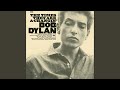
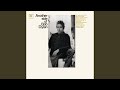
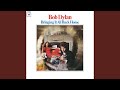
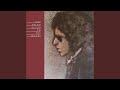
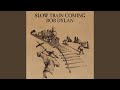
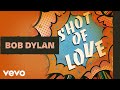
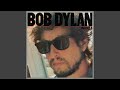
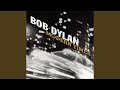
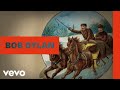
Explore the complete Bob Dylan studio albums. Click any album to see the full track list and listen.







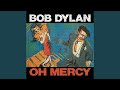


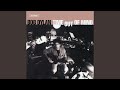
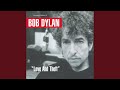
Why It Works
Listen to Bob Dylan's essential discography on Mixtuby — 17 canonical studio albums from Bob Dylan (1962) through Modern Times (2006). 160+ tracks covering the folk years, the electric revolution, the country detour, the Blood on the Tracks divorce masterpiece, and the late-career resurrection. No ads interrupting the eleven-minute sprawl of Desolation Row. No shuffle breaking the confessional sequence of Blood on the Tracks.
Why Mixtuby
Unlike Spotify or Apple Music, Mixtuby doesn't need an account. Open the page, hit play, Blowin' in the Wind starts. We organise the catalog chronologically so you can hear the full arc — the Greenwich Village folk period, the 1965 electric shock at Newport, the Basement Tapes withdrawal, the Nashville country albums, the 70s masterpieces, the Christian period, the late- career Oh Mercy to Modern Times resurrection. Fifty years of American songwriting.
Biography
Robert Allen Zimmerman was born in Duluth, Minnesota, on May 24, 1941. Grew up in Hibbing, Minnesota, listening to Little Richard, Hank Williams, and Woody Guthrie on the radio. Changed his name to Bob Dylan (after Dylan Thomas).
Dropped out of the University of Minnesota. Hitchhiked to New York in January 1961 to meet Woody Guthrie, who was dying of Huntington's disease at Greystone Park Hospital.
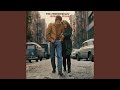
He played the Greenwich Village folk scene, signed to Columbia Records, and released Bob Dylan (1962). Nobody bought it. Then The Freewheelin' Bob Dylan (1963) arrived with Blowin' in the Wind and A Hard Rain's A-Gonna Fall, and the folk movement had found its voice.
By 1965, he was bored with folk. He plugged in at Newport. The purists booed.
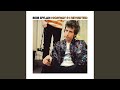
Highway 61 Revisited (1965) and Blonde on Blonde (1966) changed rock music forever.
He kept reinventing. Country albums (John Wesley Harding, Nashville Skyline). The divorce masterpiece (Blood on the Tracks, 1975).
The born-again Christian period (Slow Train Coming, 1979). A lost decade in the 80s. Then the resurrection: Oh Mercy (1989), Time Out of Mind (1997), Love and Theft (2001), Modern Times (2006) — all commercial and critical triumphs.
In 2016, he won the Nobel Prize in Literature. He didn't show up to accept it.
History
The Freewheelin' Bob Dylan (May 1963) is the album where it started. Blowin' in the Wind is the folk anthem. A Hard Rain's A-Gonna Fall is seven minutes of apocalyptic imagery written during the Cuban Missile Crisis.
Masters of War is the anti-war song no other anti-war song has matched. Don't Think Twice, It's All Right is the breakup song every singer- songwriter has tried to write since. Girl from the North Country.
Corrina, Corrina. A twenty-one-year-old wrote this.
Highway 61 Revisited (August 1965) is the electric breakthrough. Like a Rolling Stone opens the album — six minutes and thirteen seconds of rage, humiliation, and freedom. "How does it feel to be on your own, with no direction home?
" Ballad of a Thin Man. Tombstone Blues. Desolation Row is the eleven-minute closer — a surrealist tour through American history, each verse featuring different archetypes and symbols.
Rolling Stone magazine put Like a Rolling Stone at number one on their 500 Greatest Songs of All Time list.
Blonde on Blonde (June 1966) was the first double album in rock history. Visions of Johanna. Just Like a Woman.
Stuck Inside of Mobile with the Memphis Blues Again. Rainy Day Women #12 & 35. Sad Eyed Lady of the Lowlands takes up one entire side of the second disc — eleven minutes of hushed devotion.
Then Dylan crashed his motorcycle and disappeared for eighteen months.
Blood on the Tracks (January 1975) is the divorce album. Nobody writes about emotional devastation like this anymore because nobody can. Tangled Up in Blue is a masterclass in nonlinear narrative — the tenses shift, the pronouns change, the relationship unfolds backward and forward simultaneously.
Idiot Wind. Simple Twist of Fate. If You See Her, Say Hello.
Shelter from the Storm. This is what heartbreak sounds like when a genius is going through it.
Time Out of Mind (September 1997) was the late-career resurrection. Dylan was 56, nearly died of a heart condition the year before, and recorded an album about mortality and love that won three Grammys including Album of the Year. Not Dark Yet.
Love Sick. Tryin' to Get to Heaven. Standing in the Doorway.
Every song sounds like it was recorded at the end of the world.
Legacy & Influence
Bob Dylan made it possible for popular music to be literature. The Nobel Prize committee called him "a great poet in the English-speaking tradition" — equal to Seamus Heaney, Derek Walcott, Toni Morrison. Every serious songwriter since 1965 — Springsteen, Joni Mitchell, Leonard Cohen, Neil Young, Patti Smith, Kurt Cobain, Jay-Z, Kendrick Lamar — has cited Dylan as the reason they thought songs could be this.
The 1965 electric conversion changed rock music forever. When Dylan plugged in at Newport, he wasn't just betraying folk purists. He was proving that rock music could be poetry, that electric guitars didn't have to mean "baby baby baby.
" Without Dylan, there's no Sgt. Pepper's, no Velvet Underground, no Springsteen, no Radiohead. Every artist who tries to say something with a rock song is walking through the door Dylan kicked open on July 25, 1965.
His voice is famously imperfect. Critics have mocked it for sixty years. But it's the most instantly recognizable voice in popular music history.
When you hear Dylan, you know within one syllable that it's him. And that nasal, weathered, unapologetic voice is why the lyrics land. Because it sounds like a person, not a pop star.
Perfect For
For creative writing
Dylan's lyrics are literature — put him on when you need to remember what language can do.
For road trips
Highway 61 Revisited and Blood on the Tracks are built for long highway drives.
For studying poetry
The Nobel Prize in Literature winner — these lyrics reward close reading.
For introspection
Blood on the Tracks and Time Out of Mind are the late-night self-examination albums.
For understanding America
Dylan's catalog is a 50-year social history of the United States set to music.
For discovering modern songwriting
Every songwriter since 1965 learned from Dylan — start here to hear where it came from.
How to Listen
Start with The Freewheelin' Bob Dylan — the folk peak, every song a classic
Highway 61 Revisited is the essential electric album — Like a Rolling Stone alone justifies it
Blood on the Tracks requires headphones and no distractions — this is a listening album
Time Out of Mind is the late-career comeback most people miss — don't skip it
🎁 Pick The Perfect Gift For The People You Love
For the friend who knows every B-side. We chose these the way a record-store owner would — with care, a sharp eye, and prices that won't make you feel ripped off. Small gestures, big smiles.
The Vinyl Lifer Combo
Pressing, poster, t-shirt — the kit that says you actually understand the album.
The Long-Listen Setup
Headphones, turntable, a shelf they've earned. For the listener who treats Side B like a separate event.
Powered by Amazon
🛒 Shop Bob Dylan
Hand-picked vinyl, merch & gear for fans.

Bob Dylan - Blood on the Tracks (Vinyl LP)

Bob Dylan - Highway 61 Revisited (CD)

Bob Dylan T-Shirt (Official Merch)

Audio-Technica AT-LP60X Turntable

Bob Dylan Poster — Blonde on Blonde

Sony WH-1000XM4 Wireless Headphones
Powered by Amazon
Bob Dylan — FAQ
What's the best gift for a Bob Dylan fan?
It depends on the kind of fan. Top picks: The Vinyl Collector: Bob Dylan - Blood on the Tracks (Vinyl LP) · The Casual Fan: Bob Dylan T-Shirt (Official Merch) · The Audiophile: Sony WH-1000XM4 Wireless Headphones · The Decorator: Bob Dylan Poster — Blonde on Blonde. See the Gift Ideas section above for a hand-picked guide by buyer type.
Can I listen to Bob Dylan free on Mixtuby?
Yes — 17 essential Dylan studio albums are available free on Mixtuby with no account needed. 160+ tracks from Bob Dylan (1962) to Modern Times (2006), covering the folk years, electric revolution, country period, and late-career masterpieces. Press play and it starts.
What is Bob Dylan's best album?
Blood on the Tracks (1975) tops most critics' lists — Tangled Up in Blue and the divorce-album sequence are unmatched. Highway 61 Revisited (1965) is the electric masterpiece with Like a Rolling Stone. Blonde on Blonde (1966) is the double-album peak. The Freewheelin' Bob Dylan (1963) is the folk classic. Start with Freewheelin' or Highway 61 depending on whether you want acoustic or electric Dylan.
Why did Bob Dylan win the Nobel Prize in Literature?
The Swedish Academy awarded Dylan the 2016 Nobel Prize in Literature "for having created new poetic expressions within the great American song tradition." They considered his lyrics equivalent to the best American poetry of the 20th century. He was the first songwriter to win. He did not attend the ceremony.
Is Bob Dylan's voice really that bad?
Dylan's voice is one of the most distinctive in popular music — nasal, weathered, unconventional. Critics who focus on "beauty" miss the point. His voice is the instrument that delivers the lyrics with maximum character. Within one syllable, you know it's him. That instant recognizability is why the songs work. Smoother voices have covered his material, but nobody sings Dylan like Dylan.
Where should I start with Bob Dylan?
Start with The Freewheelin' Bob Dylan (1963) for the folk classics (Blowin' in the Wind, Masters of War, Don't Think Twice It's All Right). Then Highway 61 Revisited (1965) for the electric revolution (Like a Rolling Stone, Desolation Row). Then Blood on the Tracks (1975) for the emotional masterpiece (Tangled Up in Blue, Shelter from the Storm). Those three albums cover 90% of what makes Dylan essential.
You Might Also Like
Best for Your Mood
Explore More
—