

Stevie Wonder
Stevie Wonder won 25 Grammys. Twenty-five. The only person to win Album of the Year three times in five years. Blind from birth, he taught himself piano, harmonica, drums, and synthesizers — playing every instrument on his greatest albums. Talking Book, Innervisions, Fulfillingness' First Finale, and Songs in the Key of Life are the most critically acclaimed four-album run in popular music history. Superstition is the funkiest song ever recorded. Isn't She Lovely is the most joyful. Nobody has ever done what Stevie Wonder did.

Discography
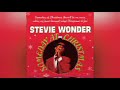
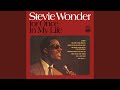
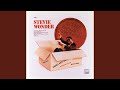
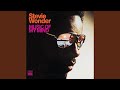
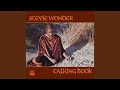
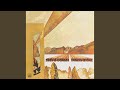
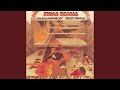
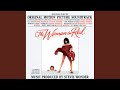
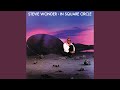
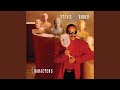
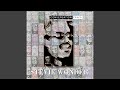
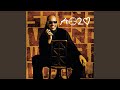
Explore the complete Stevie Wonder studio albums. Click any album to see the full track list and listen.







Why It Works
Listen to Stevie Wonder's essential discography on Mixtuby — 13 canonical studio albums from Signed, Sealed & Delivered (1970) through A Time to Love (2005). 130+ tracks covering the classic period (1972-1980), the 80s pop era, and the late-career gems. No ads interrupting the seven-minute Superstition groove. No shuffle breaking the Songs in the Key of Life sequence.
Why Mixtuby
Unlike Spotify or Apple Music, Mixtuby doesn't need an account. Open the page, hit play, Superstition starts. We organise the catalog chronologically so you can hear the full evolution — the early Motown hits, the self-produced classic period, the commercial 80s peak, and the mature late-career albums. Innervisions alone justifies the visit.
Biography
Stevland Hardaway Judkins was born six weeks premature in Saginaw, Michigan, on May 13, 1950. Too much oxygen in the incubator caused retinopathy of prematurity — he was blind from infancy. His family moved to Detroit.
By age nine he was playing piano, harmonica, and drums. At eleven, he signed to Motown and became "Little Stevie Wonder.
Fingertips (1963) went to number one when he was thirteen. He was a Motown child prodigy through the 60s — My Cherie Amour, For Once in My Life, Signed Sealed Delivered. Then he turned 21 in 1971, renegotiated his contract, got artistic control, and changed popular music forever.
Music of My Mind (1972) was the self-produced statement. Talking Book (1972) had Superstition. Innervisions (1973) had Living for the City.
Fulfillingness' First Finale (1974) won Album of the Year. Songs in the Key of Life (1976) won Album of the Year AGAIN and is widely considered the greatest album of the 1970s.
Three days after Songs in the Key of Life finished recording, he nearly died in a car accident. He survived. Continued making music for five more decades.
The Wonder Woman soundtrack (1984) included I Just Called to Say I Love You — which won him the Academy Award for Best Original Song. He's 75 years old and still performing.
History
Talking Book (October 1972) was the commercial breakthrough. Superstition is the greatest funk song ever recorded — Stevie playing every instrument, that clavinet riff, that drum break, Jeff Beck almost getting the song before Stevie kept it for himself. You Are the Sunshine of My Life is the ballad that won the Grammy for Best Pop Vocal Performance.
I Believe (When I Fall in Love It Will Be Forever). The album went platinum and established the template: funk, soul, and pop combined by one man playing everything.
Innervisions (August 1973) is the masterpiece. Living for the City is seven minutes of urban realism — the spoken-word interlude where the main character gets arrested is still devastating fifty years later. Higher Ground has the fuzzed- out clavinet riff every funk band copied.
Don't You Worry 'Bout a Thing is the Latin-flavored hit. Golden Lady. All in Love Is Fair.
Too High. He won Album of the Year, Best Engineered Recording, and Best Pop Vocal Performance.
Songs in the Key of Life (September 1976) is the album that changed everything. Double album plus a bonus EP — 21 songs in total. Sir Duke is the Ellington tribute.
I Wish is the childhood-memory funk classic. Isn't She Lovely is the daughter-birth celebration. As is the seven-minute gospel- soul epic.
Pastime Paradise was later sampled by Coolio for Gangsta's Paradise. It debuted at number one on the Billboard 200 — the first album by an American artist to do so. Won Album of the Year.
Every serious R&B and hip-hop artist since 1976 considers it untouchable.
Hotter than July (September 1980) returned to the funk. Master Blaster (Jammin') is the Bob Marley tribute. Happy Birthday is the Martin Luther King Jr.
campaign song that helped get the holiday passed in 1983. I Ain't Gonna Stand for It. Lately.
Did I Hear You Say You Love Me. Six of the ten tracks charted.
Legacy & Influence
Stevie Wonder proved that one person, playing every instrument, could make better albums than most bands. Prince followed the template. D'Angelo followed the template.
Pharrell Williams, Frank Ocean, Kendrick Lamar, Bruno Mars — every multi- instrumentalist R&B perfectionist traces back to Stevie Wonder in the Talking Book studios in 1972.
The synthesizer in R&B and pop music exists because of Stevie Wonder. He adopted the ARP 2600 and TONTO (The Original New Timbral Orchestra) when most soul musicians were still using acoustic piano. Superstition's clavinet riff is played through a wah-wah pedal.
Living for the City's bassline is a Moog synthesizer. He made electronic instruments soulful twenty years before anyone else could.
25 Grammys including four Album of the Year wins (three in consecutive eligible years — 1974, 1975, 1977 — nobody else has done this). The Presidential Medal of Freedom in 2014. The Rock and Roll Hall of Fame in 1989.
The Songwriters Hall of Fame in 1983. He's one of the ten best-selling artists in American history and the most critically decorated male vocalist of the 20th century.
Perfect For
For good vibes
Songs in the Key of Life and Talking Book are pure joy in album form.
For studying funk
Superstition, Higher Ground, and I Wish are the funkiest songs ever recorded.
For dinner parties
Hotter than July and Sir Duke bring warmth without being background music.
For driving
Living for the City and Master Blaster are built for open highway listening.
For studying soul music
13 albums across 35 years — the perfect education in soul and R&B.
For romantic evenings
Isn't She Lovely, Ribbon in the Sky, and Lately are the slow-dance classics.
How to Listen
Start with Talking Book — Superstition opens the album, every track is essential
Innervisions is the critical masterpiece — Living for the City is the centerpiece
Songs in the Key of Life is 21 tracks — budget 90 minutes for the full experience
Hotter than July is the most underrated — Master Blaster and Happy Birthday are hits
🎁 Pick The Perfect Gift For The People You Love
Real gifts for the heads who actually listen. We picked combos with love (zero algorithm) at prices that don't bully your wallet. Small things, big reactions — that's the move.
The Heads' Combo
Vinyl, cap, hoodie — the trio every real fan recognizes from across the room.
The Crate Digger Kit
Turntable, headphones, a shirt that says they were here first. For the friend who quotes the album from memory.
Powered by Amazon
🛒 Shop Stevie Wonder
Hand-picked vinyl, merch & gear for fans.

Stevie Wonder - Songs in the Key of Life (Vinyl LP)

Stevie Wonder - Innervisions (CD)

Stevie Wonder T-Shirt (Official Merch)

Audio-Technica AT-LP60X Turntable

Stevie Wonder Poster — Songs in the Key of Life

Sony WH-1000XM4 Wireless Headphones
Powered by Amazon
Stevie Wonder — FAQ
What's the best gift for a Stevie Wonder fan?
It depends on the kind of fan. Top picks: The Vinyl Collector: Stevie Wonder - Songs in the Key of Life (Vinyl LP) · The Casual Fan: Stevie Wonder T-Shirt (Official Merch) · The Audiophile: Sony WH-1000XM4 Wireless Headphones · The Decorator: Stevie Wonder Poster — Songs in the Key of Life. See the Gift Ideas section above for a hand-picked guide by buyer type.
Can I listen to Stevie Wonder free on Mixtuby?
Yes — 13 essential Stevie Wonder studio albums are available free on Mixtuby with no account needed. 130+ tracks from Signed, Sealed & Delivered (1970) to A Time to Love (2005), covering the classic period and the 80s hits. Press play and it starts.
What is Stevie Wonder's best album?
Songs in the Key of Life (1976) tops most critics' lists — it's a double album that won Album of the Year and is considered the greatest R&B album ever made. Innervisions (1973) is the tighter masterpiece. Talking Book (1972) has Superstition. Start with Talking Book for accessibility, Songs in the Key of Life for the full experience.
How many Grammy awards has Stevie Wonder won?
Stevie Wonder has won 25 Grammy Awards — more than any other male solo artist in history. He won Album of the Year three times in the 1970s (Innervisions 1974, Fulfillingness' First Finale 1975, Songs in the Key of Life 1977) — a record that stood for decades. He also won the Academy Award for Best Original Song for I Just Called to Say I Love You in 1985.
Does Stevie Wonder play every instrument on his albums?
On the classic period albums (1972-1976) Stevie played virtually every instrument himself — piano, synthesizers, drums, bass, clavinet, harmonica, and sometimes guitar. Innervisions and Songs in the Key of Life are largely one- man performances. He used session musicians for horns and strings, but the rhythmic foundation and lead instruments are all Stevie.
Is Stevie Wonder good for studying?
Stevie Wonder's instrumentals and softer tracks work well for light studying — Sir Duke, You Are the Sunshine of My Life, and Golden Lady have minimal vocal complexity. Avoid the funk classics (Superstition, Higher Ground) for intensive focus work — they demand attention. Hotter than July and the Jobim-influenced sections of Songs in the Key of Life work well as background music.
You Might Also Like
Best for Your Mood
Explore More
—